
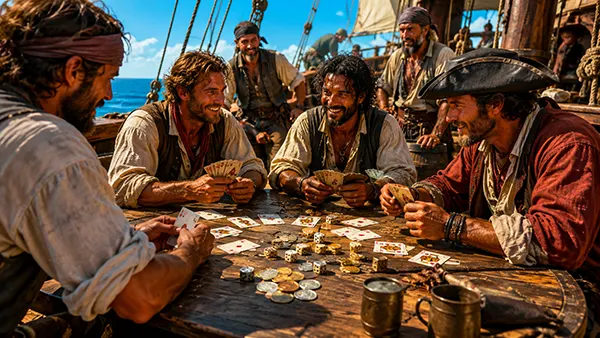
Long sea voyages often lasted for months, sometimes even years, leaving crews with limited entertainment and few opportunities to break the monotony of life aboard ship. From the merchant vessels of the seventeenth century to pirate ships crossing the Atlantic, gambling became a common pastime among sailors. Card games, dice, wagers on daily events and informal betting systems helped pass the time, but they also created conflicts, debt problems and disciplinary challenges. Historical records from naval logs, maritime regulations and sailors’ memoirs reveal that gambling was deeply woven into everyday life at sea.
Why Gambling Became Popular Among Seafarers
Life aboard a ship was physically demanding and psychologically exhausting. Sailors spent long periods isolated from their families while facing storms, disease and uncertain futures. In these conditions, gambling offered a simple form of entertainment that required little equipment. A deck of cards or a set of dice could easily be stored in a sailor’s sea chest and brought out during off-duty hours.
The unpredictable nature of maritime life also encouraged betting. Crew members frequently placed wagers on the arrival date of a vessel, weather conditions, the sighting of land or the outcome of naval encounters. Such bets reflected the constant uncertainty surrounding ocean travel and provided excitement during otherwise repetitive days.
Money was not always the only stake involved. Sailors often gambled with tobacco, alcohol, food rations or personal belongings. On ships where cash was scarce, these items sometimes carried more practical value than coins. As a result, gambling could influence daily life in ways that extended beyond simple entertainment.
Common Games Played During Long Voyages
Card games were among the most widespread forms of gambling at sea. Variations of games similar to modern poker, brag and faro appeared aboard merchant ships and naval vessels. Rules often changed from one crew to another, creating local traditions that travelled across oceans with experienced sailors.
Dice games were equally popular because they required minimal equipment and could be played almost anywhere on a ship. Historical accounts describe sailors carving dice from bone, wood or ivory when commercial gaming pieces were unavailable. Simple games based on chance appealed to crews because they could be learned quickly.
Some wagers did not involve formal games at all. Crew members frequently bet on which sailor would complete a task first, how long a storm would last or whether a ship would reach port before a specific date. These informal bets formed part of the social culture that developed among men living together in confined spaces for extended periods.
Pirates, Merchants and Their Different Attitudes Toward Gambling
Pirate crews generally had more freedom than sailors serving on naval or merchant vessels. Many pirate ships operated under written articles that established rules for dividing treasure and resolving disputes. While gambling was common among pirates, some pirate codes restricted certain forms of wagering because unpaid debts could threaten unity within the crew.
Merchant ships often tolerated gambling as long as it did not interfere with work. Captains understood that entertainment helped maintain morale during lengthy journeys. However, excessive gambling could lead to quarrels, accusations of cheating and reduced discipline, forcing officers to intervene.
Naval vessels typically enforced stricter regulations. Many European navies introduced rules limiting gambling because commanders feared that financial disputes could weaken operational effectiveness. Official records from the British Royal Navy show repeated concerns about gambling-related conflicts among sailors during the eighteenth and nineteenth centuries.
Debt, Cheating and Shipboard Conflicts
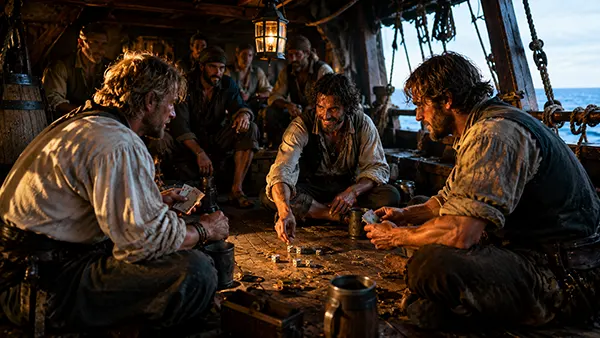
Gambling debts represented one of the greatest dangers associated with gaming at sea. Since sailors often received wages only after completing a voyage, players sometimes accumulated obligations they could not immediately repay. These unpaid debts frequently caused arguments that disrupted relations among crew members.
Cheating accusations were another common source of tension. In the confined environment of a ship, trust was essential for survival. A sailor suspected of manipulating cards or loaded dice risked losing the confidence of the entire crew. Historical reports describe incidents in which disputes over gambling escalated into physical fights.
Some captains imposed penalties on habitual gamblers who repeatedly created problems. Punishments varied depending on the vessel and historical period but could include loss of privileges, confiscation of gambling equipment or temporary restrictions on shore leave once the ship reached port.
Restrictions and Historical Attempts to Control Gambling at Sea
As maritime trade expanded, shipping companies increasingly recognised the risks associated with uncontrolled gambling. Owners worried that heavily indebted sailors might desert their vessels in foreign ports or become involved in theft to settle obligations. This concern encouraged stricter oversight aboard many commercial ships.
Several naval administrations introduced formal regulations banning or limiting gaming activities. Officers conducted inspections to confiscate cards and dice, particularly during military campaigns when maintaining discipline was considered critical. Despite these efforts, enforcement remained inconsistent because gambling was deeply embedded in sailor culture.
Religious influences also played a role. Chaplains serving on naval vessels often criticised gambling as a moral problem that encouraged greed and conflict. Their objections reflected broader social attitudes that emerged in Europe and North America during the eighteenth and nineteenth centuries.
The Legacy of Maritime Gambling Traditions
Many gambling traditions that developed aboard ships eventually influenced games played on land. Sailors carried card games, betting customs and gaming terminology from one port to another, contributing to the spread of gambling practices across continents. Maritime trade routes became channels for cultural exchange as well as commerce.
Modern historians continue to study ship logs, personal diaries and maritime records to understand how gambling shaped social relationships at sea. These sources reveal that gaming served multiple purposes, including entertainment, competition and social bonding among crews facing difficult conditions.
Although strict regulations eventually reduced some forms of gambling aboard professional vessels, the practice remained a notable feature of maritime history. The experiences of sailors, pirates and merchants demonstrate how people created their own forms of recreation while travelling across oceans long before modern entertainment existed.