
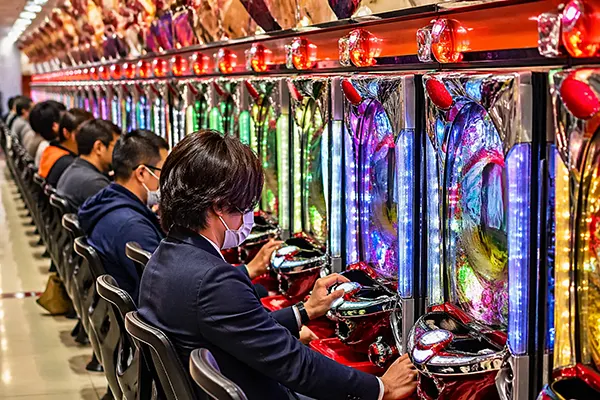
Pachinko is one of the most unusual examples of how a country can regulate gambling without formally legalising it. In Japan, traditional casinos were prohibited for decades, yet millions of people regularly engage in pachinko activities that resemble gambling in both structure and financial outcome. This paradox did not appear by chance. It is the result of deliberate legal frameworks, cultural adaptation, and economic interests that shaped a system operating in a carefully maintained grey area.
The Origins of Pachinko and Its Transformation into a Gambling-Like Activity
Pachinko began in the early 20th century as a simple mechanical game inspired by Western pinball machines. Initially designed for children, it gradually evolved into a form of adult entertainment, particularly after World War II when Japan experienced economic hardship. Small parlours offered a relatively affordable way to pass time, and the game’s structure slowly shifted towards monetary incentives.
By the 1950s and 1960s, pachinko had spread rapidly across urban areas. Operators introduced systems where players could exchange balls for prizes, effectively linking gameplay to financial value. While this did not directly constitute gambling under Japanese law, it created a behavioural loop similar to betting, where outcomes were uncertain and rewards had tangible worth.
The growth of pachinko was also tied to industrialisation. Large corporations entered the market, improving machine technology and expanding venues. By the late 20th century, pachinko had become a multi-billion-pound industry, with thousands of parlours operating nationwide. Despite its scale, it remained legally classified as a form of amusement rather than gambling.
Why Pachinko Was Never Officially Classified as Gambling
Japanese law historically prohibited most forms of gambling, with limited exceptions such as horse racing and lotteries. Pachinko avoided classification as gambling because players technically did not receive money directly from the parlour. Instead, they exchanged winnings for prizes, which could later be converted into cash elsewhere.
This legal distinction became the foundation of the system. Authorities accepted the idea that pachinko was a skill-based or entertainment activity, even though chance plays a significant role. The absence of direct cash payouts allowed operators to function within existing regulations without formally violating them.
Over time, this interpretation became institutionalised. Rather than rewriting the law to accommodate pachinko, regulators maintained the ambiguity. This approach allowed the industry to thrive while preserving the formal stance against gambling.
The “Three-Shop System” and How It Circumvents Gambling Laws
The key mechanism that enables pachinko to operate within legal boundaries is known as the “three-shop system.” This structure separates gameplay, prize exchange, and cash conversion into distinct entities, each technically independent. While widely understood by participants, the system maintains a legal separation that satisfies regulatory requirements.
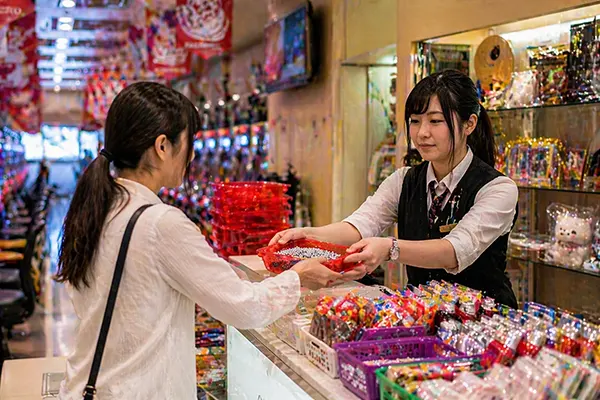
In practice, a player wins balls in a pachinko parlour and exchanges them for prizes, often small tokens or items with assigned value. These prizes can then be taken to a nearby shop, usually located just outside the parlour, where they are purchased for cash. A third entity handles the distribution and resale of these items, completing the cycle.
This arrangement creates a controlled environment where money flows indirectly. Because no single business handles both gameplay and cash payouts, the system avoids classification as illegal gambling. Regulators tolerate this model as long as formal independence between the entities is maintained.
Legal Interpretation and Government Oversight
Authorities in Japan are fully aware of how the three-shop system operates. Rather than attempting to dismantle it, they focus on regulating safety, taxation, and operational standards. Pachinko parlours are subject to strict rules regarding machine settings, opening hours, and player protection measures.
Police agencies play a central role in oversight, particularly through licensing procedures. Operators must comply with detailed regulations that control the probability settings of machines and ensure transparency in operations. This level of supervision distinguishes pachinko from unregulated gambling environments in other countries.
The government also benefits economically from the industry through taxation and employment. Pachinko provides jobs, supports local economies, and generates substantial revenue. These factors contribute to the continued acceptance of its legal status, despite ongoing debates about its classification.
Economic Impact and Cultural Acceptance of Pachinko in Modern Japan
Pachinko remains deeply embedded in Japanese society. At its peak, the industry generated revenues comparable to major global entertainment sectors. Although participation has declined slightly in recent years, it still represents a significant portion of Japan’s leisure economy.
Culturally, pachinko occupies a unique space. It is neither fully accepted as gambling nor entirely dismissed as mere entertainment. Many players view it as a routine activity, similar to visiting an arcade or cinema. This perception reduces the stigma typically associated with gambling in other countries.
At the same time, concerns about addiction and financial risk have grown. Authorities and operators have introduced measures such as spending limits and awareness campaigns. These efforts aim to balance economic benefits with social responsibility, reflecting a gradual shift in how the activity is managed.
The Future of Pachinko in the Context of Legal Casinos
Japan has recently begun to introduce regulated casino resorts under strict conditions, marking a significant policy shift. This development raises questions about the long-term role of pachinko. While casinos operate under clear legal frameworks, pachinko continues to exist in its established grey area.
Some analysts believe that pachinko may eventually face stricter regulation or decline as legal casinos expand. Others argue that its accessibility and cultural familiarity will ensure its survival. Unlike casinos, pachinko parlours are widespread and require lower financial commitment from players.
The future of pachinko will likely depend on how Japan balances modern gambling legislation with existing systems. Its history demonstrates how legal interpretation, economic incentives, and cultural habits can combine to create an industry that operates outside conventional definitions while remaining firmly rooted in society.