
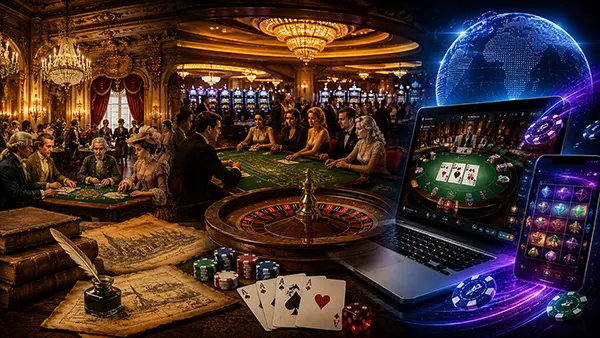
The history of casinos stretches back several centuries and reflects changing attitudes towards entertainment, regulation, and technology. What began as exclusive gaming houses for wealthy visitors gradually developed into public casinos, international gaming destinations, and eventually licensed online casino websites available across many regulated markets. While the games have evolved significantly, many familiar classics still trace their origins to tables that first appeared in Europe hundreds of years ago.
Where the First Casinos Began
The word “casino” originates from the Italian language, where it originally referred to a small social gathering place rather than a gambling establishment. One of the earliest recognised public gaming houses was the Ridotto, founded in Venice in 1638. It was created by the Venetian government to regulate gambling during the city’s famous carnival and is widely regarded as one of the first state-controlled casinos in Europe.
During the eighteenth and nineteenth centuries, gambling houses became increasingly popular across Europe. France introduced games that later gained worldwide recognition, including roulette and baccarat, while German spa towns combined leisure, tourism, and casino entertainment. These venues attracted nobles, merchants, writers, and international travellers seeking both recreation and social interaction.
As governments introduced licensing systems and taxation, casinos gradually became legitimate entertainment businesses rather than informal gambling houses. Their evolution eventually led to the development of online gaming, making traditional casino entertainment available far beyond physical gaming venues. Modern websites, including Nolimit way casino, commonly feature established games such as roulette, blackjack, baccarat, and slots that have evolved from centuries of casino history.
How Famous Casino Games Spread Across Europe
Many of today’s best-known casino games have European origins. Roulette developed in France during the eighteenth century, while baccarat became especially popular among the French aristocracy before expanding to other countries. Dice games also remained an important part of casino entertainment throughout Europe.
Card games continued to evolve as they crossed national borders. Blackjack developed from earlier French card games, while poker reached its modern form after becoming established in North America. Over time, rules were refined to create games that combined strategy, probability, and entertainment.
By the late nineteenth century, casinos had become important landmarks in destinations such as Monte Carlo. Their elegant architecture, professional gaming rooms, and carefully regulated operations influenced casino design around the world, establishing standards that remain recognisable in many modern gaming venues.

The Expansion of Casino Entertainment Worldwide
The twentieth century transformed gambling into a global entertainment industry. Destinations such as Las Vegas demonstrated that casinos could become part of much larger resorts offering hotels, restaurants, concerts, shopping, and sporting events alongside gaming. This broader approach attracted visitors with a wide range of interests and helped casinos become major contributors to local tourism.
Many countries also introduced comprehensive licensing systems designed to protect players, supervise operators, and ensure fair gaming practices. Independent testing of casino games, financial audits, identity verification, and responsible gambling measures gradually became standard requirements in regulated markets, increasing confidence among players.
Technological innovation also reshaped casino gaming. Mechanical slot machines evolved into digital video slots with bonus rounds, multiple paylines, progressive jackpots, and themed content. These developments significantly expanded the variety of games available while preserving the familiar gameplay principles that players had enjoyed for generations.
The Arrival of Online Casinos
The first online casinos appeared during the second half of the 1990s as internet access became increasingly widespread. Early gaming websites offered a relatively small selection of titles, but improvements in software development, internet infrastructure, and cybersecurity quickly enhanced both performance and reliability.
By 2026, licensed online casinos commonly provide extensive game libraries that include slots, roulette, blackjack, baccarat, poker variants, and live dealer games streamed in real time from professional studios. Mobile compatibility, encrypted payment processing, secure account verification, and responsible gambling tools have become standard features across regulated markets.
Although casino technology has changed dramatically over the centuries, the fundamental concept has remained remarkably consistent. From the Ridotto in seventeenth-century Venice to today’s online casinos, the industry continues to combine established gaming traditions with modern innovation, allowing classic casino entertainment to remain relevant while adapting to the expectations of new generations of players.