
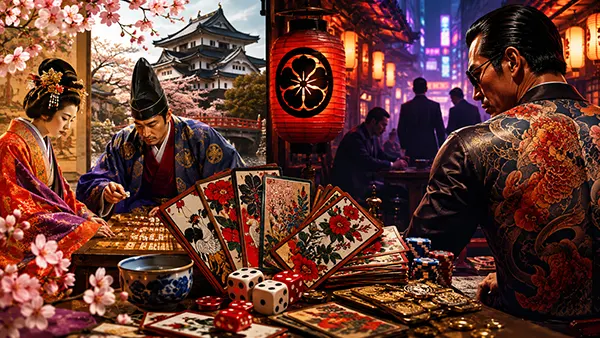
Gambling has occupied a complicated position in Japanese society for centuries. Although modern Japanese law officially restricts most forms of betting, games of chance have long existed within social traditions, entertainment districts, travelling fairs, and organised crime networks. From aristocratic games played in imperial courts to underground baccarat rooms controlled by yakuza syndicates, gambling became deeply connected with class divisions, economics, leisure, and political control. The history of Japanese gambling also reflects broader cultural changes, including urbanisation during the Edo period, post-war reconstruction, and the rise of tightly regulated betting industries such as pachinko and horse racing in the twenty-first century.
Early Gambling Traditions in Imperial and Feudal Japan
The origins of gambling in Japan can be traced to ancient social rituals and imported Chinese games. Historical records from the Nara and Heian periods describe members of the imperial court participating in contests involving dice, shells, and prediction games. These activities were not always associated with money. In many cases, players wagered poetry manuscripts, ceremonial objects, or social status. Aristocrats considered such entertainment a display of intelligence and refinement rather than reckless behaviour.
During the medieval period, gambling expanded beyond noble circles and became common among soldiers, merchants, and travelling performers. Dice games were especially popular in roadside inns and market towns. Samurai authorities often attempted to prohibit large-scale wagering because unpaid debts frequently caused violence and theft. Despite repeated bans from feudal rulers, underground gambling continued to spread throughout the provinces.
By the Edo period between 1603 and 1868, gambling had become firmly established in urban entertainment culture. Card games such as hanafuda gained popularity among ordinary citizens, while dice gambling houses operated secretly in many towns. Local authorities alternated between crackdowns and unofficial tolerance because gambling also generated income for corrupt officials and criminal intermediaries. This contradictory relationship between prohibition and acceptance remained a recurring feature of Japanese gambling history.
The Social Role of Gambling in Edo Society
The Edo era transformed gambling into a significant social activity among working-class communities. Labourers, firefighters, construction workers, and travelling craftsmen often gathered in teahouses where small wagers accompanied card games and dice competitions. Gambling provided temporary escape from rigid social hierarchies imposed by the Tokugawa shogunate. In districts with limited entertainment options, these gatherings also strengthened local social networks.
Authorities feared gambling partly because it encouraged the formation of unofficial groups outside state supervision. Many gambling organisers developed protection systems, debt collection practices, and territorial control methods. Historians frequently identify these groups as early foundations of organised criminal structures later associated with the yakuza. Illegal betting dens became places where loyalty, intimidation, and financial dependency shaped social relationships.
Religious attitudes toward gambling were also mixed during this period. Buddhist teachings generally criticised excessive greed and financial irresponsibility, yet temples and festival organisers occasionally tolerated small betting activities connected to seasonal events. Some travelling festivals even included games of chance as part of broader public celebrations, illustrating how deeply gambling had entered everyday Japanese life.
The Rise of Organised Crime and Underground Betting Networks
The connection between gambling and organised crime became particularly visible during the late nineteenth and early twentieth centuries. After the Meiji Restoration modernised Japan, rapid industrialisation created large urban populations with increasing demand for entertainment and informal financial activity. Illegal gambling dens appeared in Osaka, Tokyo, Yokohama, and port cities where migrant workers and sailors searched for quick earnings.
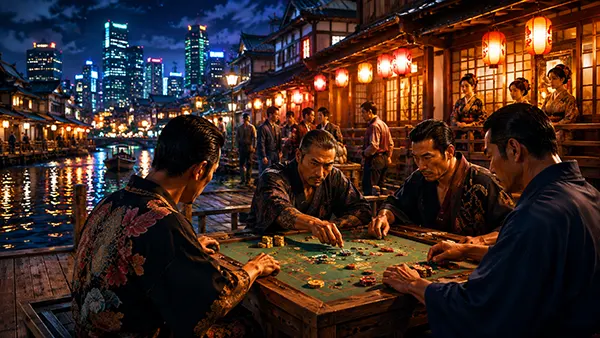
Many early yakuza organisations expanded through gambling operations. Criminal groups controlled betting houses, collected debts, and offered protection services to operators. Bakuto gangs, which specialised in gambling, became one of the historical roots of modern yakuza syndicates. Their members often displayed tattoos and followed strict codes of loyalty that later became associated with organised crime culture in Japan.
After the Second World War, black markets and economic instability accelerated underground gambling activity. Illegal casinos operated in entertainment districts while criminal syndicates profited from sports betting, card games, and unlicensed lotteries. During the 1950s and 1960s, several major yakuza families accumulated substantial wealth through these operations. Law enforcement agencies repeatedly launched anti-gambling campaigns, yet corruption and political connections allowed many networks to continue functioning for decades.
How Yakuza Gambling Influenced Popular Culture
Japanese cinema and literature frequently portrayed gambling as part of yakuza identity. Films produced during the post-war era often depicted professional gamblers navigating honour codes, debt obligations, and territorial disputes. These stories contributed to the romanticised image of organised crime that became internationally recognised through directors such as Kinji Fukasaku and Takeshi Kitano.
Card games and gambling rituals also entered Japanese popular entertainment. Traditional hanafuda cards appeared in films, manga, and television dramas, while stories about high-stakes mahjong competitions attracted large audiences. Even modern anime series continue to use gambling scenarios to explore themes of risk, manipulation, and social pressure. This cultural fascination reflects Japan’s long historical relationship with betting activities despite legal restrictions.
At the same time, real-world consequences remained serious. Illegal gambling often led to debt dependency, extortion, and violence. Japanese authorities increasingly targeted yakuza involvement in betting during the late twentieth century, especially after stronger anti-organised crime laws were introduced in the 1990s. Although criminal groups still participate in underground gambling, their visibility and influence have declined compared with previous decades.
Modern Gambling in Japan and Its Cultural Contradictions
Modern Japan maintains a complex approach to gambling. Most casino gambling remained illegal for decades, yet several regulated forms of betting became socially accepted. Public wagering on horse racing, bicycle racing, boat racing, and motorcycle racing operates legally under government supervision. These industries generate billions of yen annually and contribute tax revenue to local authorities.
Pachinko occupies a unique position within Japanese entertainment culture. Although technically classified as a recreational game rather than gambling, pachinko parlours allow players to exchange winnings indirectly for cash through separate redemption systems. By 2026, pachinko remains one of the largest leisure industries in Japan, despite declining participation among younger generations. Large urban centres still contain hundreds of parlours attracting regular customers from different social backgrounds.
In recent years, Japan has cautiously moved toward legal casino development through integrated resort legislation. Government officials argued that controlled casino tourism could stimulate regional economies and attract international visitors. However, public debate remains divided. Critics warn about addiction risks, money laundering concerns, and potential criminal influence, while supporters point to economic benefits and tighter regulatory frameworks.
The Future of Gambling Culture in Japan
Japan’s gambling landscape in 2026 reflects tension between historical tradition and modern regulation. Authorities continue strengthening measures against illegal betting networks while expanding oversight of legal gambling industries. Digital technology has also introduced new challenges, including online betting services operated from overseas jurisdictions that remain difficult for domestic regulators to control completely.
Younger generations in Japan increasingly view gambling differently from previous decades. Traditional card games and local betting houses no longer dominate leisure culture in the same way they once did. Instead, mobile gaming, esports competitions, and digital entertainment compete for attention. Nevertheless, pachinko halls, racecourses, and regulated betting events continue attracting millions of participants each year.
The historical connection between gambling, entertainment, and organised crime still influences public attitudes today. Japanese society often treats gambling with caution rather than open celebration. Yet its cultural presence remains undeniable, stretching from imperial court amusements to modern integrated resorts and underground betting circles linked to the yakuza. This long and contradictory history continues shaping how Japan balances regulation, morality, economic interests, and public entertainment.